





How Do Professionals Install AC Safely at Home
February 24, 2026
Installing a home air conditioning system is more than just mounting a unit and turning it on. Professional HVAC technicians follow a structured process designed to protect your property, ensure energy efficiency, and meet safety standards. When done correctly, a safe AC installation helps your system run smoothly for years while reducing the risk of electrical issues, refrigerant leaks, and poor airflow.
This guide explains how professionals install AC safely at home, what steps they follow, and why expert installation matters for homeowners.
Understanding the Importance of Safe AC Installation
Air conditioners combine electrical components, refrigerant chemicals, and mechanical parts. Because of this, improper installation can lead to:
- Electrical hazards
- Refrigerant leaks
- Reduced cooling performance
- Higher energy bills
- Shortened equipment lifespan
Professional installers follow guidelines from organizations such as the Occupational Safety and Health Administration and the Environmental Protection Agency to reduce risks and maintain compliance with safety rules.
Safe installation is not only about comfort, it protects your home and helps the system operate efficiently.
Pre-Installation Assessment and Load Calculation
Before any tools come out, professionals begin with a careful home evaluation.
Home Cooling Load Calculation
Technicians calculate the correct AC size using methods aligned with the Air Conditioning Contractors of America Manual J guidelines. This step considers:
- Square footage
- Ceiling height
- Insulation quality
- Window placement
- Local climate
Installing the wrong size unit is a common mistake. An oversized system may short cycle, while an undersized unit struggles to cool the home.
Electrical System Check
Installers inspect the electrical panel to confirm it can support the new air conditioner. They verify:
- Breaker capacity
- Wiring condition
- Proper grounding
This early inspection prevents overloads and reduces fire risk later.
Choosing the Right Installation Location
Placement of both indoor and outdoor components affects performance and safety.
Indoor Unit Placement
Professionals select a location that allows:
- Balanced airflow
- Easy maintenance access
- Proper drainage slope
- Distance from heat sources
For central AC systems, the evaporator coil is usually installed above the furnace or inside the air handler.
Outdoor Condenser Placement
The outdoor unit must sit on a stable, level surface. Technicians ensure:
- Adequate clearance on all sides
- Good airflow
- Protection from flooding
- Distance from bedroom windows to reduce noise
Proper placement improves efficiency and extends equipment life.
Preparing the Work Area Safely
Before installation begins, professionals take safety precautions.
Power Isolation
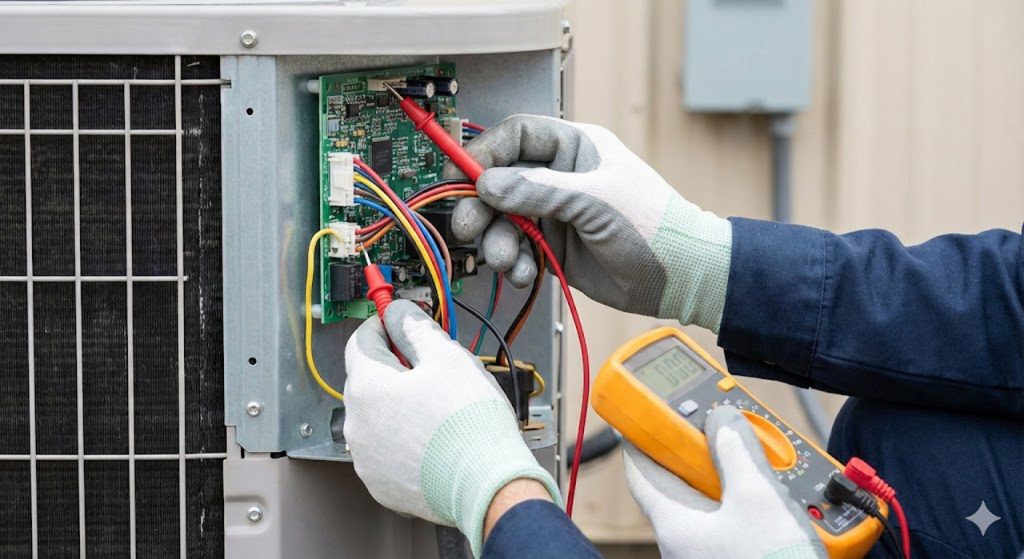
Technicians shut off power at the breaker panel and verify with a voltage tester. This step protects both the installer and the home.
Protective Equipment
Professional installers typically use:
- Insulated gloves
- Safety glasses
- Proper footwear
- Refrigerant-rated tools
These measures align with workplace safety practices defined in OSHA guidance.
Installing the Indoor Components
This phase varies depending on whether the system is central air, ductless mini-split, or window unit. However, the safety principles remain consistent.
Mounting the Evaporator Coil or Air Handler
Installers secure the indoor unit firmly to prevent vibration. They also:
- Seal connections to prevent air leaks
- Ensure proper condensate drainage
- Check airflow direction
Poor mounting can lead to water damage or reduced efficiency.
Connecting the Drain Line
The condensate drain removes moisture collected during cooling. Professionals:
- Maintain proper slope
- Install a trap if required
- Test water flow
Blocked or poorly installed drain lines are a common cause of ceiling and wall damage.
Safe Refrigerant Line Installation
Refrigerant handling is one of the most technical parts of AC installation.
Proper Line Routing and Insulation
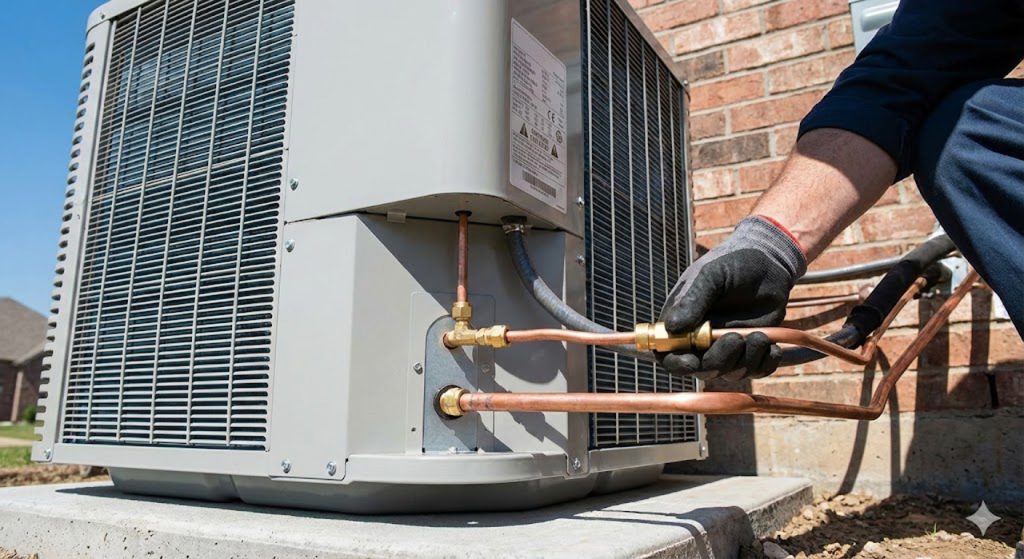
Technicians carefully route copper refrigerant lines between indoor and outdoor units. They:
- Avoid sharp bends
- Add insulation to the suction line
- Secure lines to prevent vibration
Leak Prevention and Pressure Testing
Before charging the system, professionals pressure test the lines using nitrogen. This helps detect leaks early.
Many modern systems use refrigerants such as R-410A refrigerant, which must be handled using EPA guidelines. Certified technicians are trained to manage refrigerants safely and legally.
Electrical Connections and Code Compliance
Electrical work must follow strict standards to reduce fire and shock risks.
Following the National Electrical Code
Professional installers wire the system according to the National Electrical Code. Key steps include:
- Installing a dedicated disconnect box
- Using the correct wire gauge
- Proper grounding
- Securing conduit connections
Thermostat Wiring
Technicians connect low-voltage thermostat wires carefully to ensure accurate communication between system components. Incorrect wiring can cause system failure or erratic operation.
Vacuuming and Charging the System
Once connections are complete, professionals prepare the refrigerant system.
Deep Vacuum Process
Technicians use a vacuum pump to remove:
- Moisture
- Air
- Contaminants
This step is essential for long-term system reliability. Moisture left in the system can form acids that damage the compressor.
Accurate Refrigerant Charging
Installers charge the system according to manufacturer specifications. They measure:
- Superheat
- Subcooling
- System pressures
This ensures the air conditioner runs efficiently and avoids compressor strain.
System Testing and Performance Verification
After installation, professionals perform a full operational test.
Initial Startup Checks
Technicians verify:
- Proper airflow
- Correct temperature drop
- Stable electrical readings
- Smooth compressor operation
Safety Controls Review
They also confirm that safety features work properly, including:
- Float switches
- Pressure switches
- Breaker response
Testing ensures the system operates safely under normal conditions.
Sealing, Insulating, and Final Cleanup
Professional work includes finishing details that many DIY installs miss.
Air Sealing
Installers seal:
- Duct connections
- Line set penetrations
- Air handler gaps
Proper sealing improves efficiency and indoor comfort.
Insulation Check
Technicians confirm insulation is intact on refrigerant lines and ductwork to prevent energy loss and condensation issues.
Job Site Cleanup
A professional team removes debris, packaging, and old equipment, leaving the home clean and safe.
Homeowner Guidance and Maintenance Tips
Before leaving, reputable HVAC professionals explain how to operate and maintain the new system.
Homeowners typically receive guidance on:
- Thermostat settings
- Filter replacement schedule
- Signs of potential problems
- Recommended maintenance intervals
At Done Deal A/C & Heating Katy, technicians also make sure homeowners understand their system so they can protect their investment and maintain efficient cooling.
Common Safety Mistakes DIY Installations Make
Understanding professional standards highlights why DIY installation often leads to problems.
Frequent mistakes include:
- Incorrect unit sizing
- Poor electrical connections
- Refrigerant leaks
- Inadequate vacuuming
- Improper drainage slope
- Violating local codes
While installing a window unit may be manageable for some homeowners, central AC systems require technical training and certification.
When to Schedule Professional AC Installation
You should consider professional installation when:
- Replacing a central air system
- Installing a ductless mini-split
- Upgrading to high-efficiency equipment
- Changing home electrical capacity
- Adding cooling to a new home
Professional installation helps protect warranties and ensures compliance with safety standards.
Done Deal A/C & Heating Katy: Trusted AC Installation in Grand Lakes Phase 4 Area
When your home needs reliable cooling, choosing the right HVAC company makes all the difference. Homeowners in Grand Lakes Phase 4 turn to Done Deal A/C & Heating Katy for professional AC installation that focuses on safety, efficiency, and long-term performance.
Local Expertise That Fits Grand Lakes Phase 4 Homes
Every neighborhood has unique cooling needs, and Grand Lakes Phase 4 is no exception. Our team understands the home styles, insulation patterns, and climate demands common in this part of Katy. That local knowledge allows us to recommend properly sized air conditioning systems that cool your home evenly without wasting energy.
Instead of one-size-fits-all solutions, we evaluate your space carefully to help you get the most from your new AC system.
Professional Installation You Can Count On
At Done Deal A/C & Heating Katy, we follow a step-by-step installation process designed to protect your home and maximize system life. Our licensed technicians handle:
- Accurate load calculations
- Safe electrical connections
- Proper refrigerant charging
- Secure indoor and outdoor unit placement
- Full system testing before completion
This careful approach helps prevent common problems like short cycling, weak airflow, and early equipment failure.
Energy Efficiency That Helps Lower Utility Bills
A properly installed air conditioner does more than cool your home, it helps control monthly energy costs. Our team focuses on:
- Correct system sizing
- Tight duct and line sealing
- Optimized airflow
- Smart thermostat setup
These details help your AC run smoothly during the long Katy cooling season while keeping energy use under control.
Fast, Clean, and Respectful Service
We know AC installation can feel disruptive, so our team works efficiently while respecting your home. Homeowners in Grand Lakes Phase 4 appreciate that we:
- Arrive on time
- Protect floors and work areas
- Keep the job site clean
- Remove old equipment
- Test everything before we leave
Our goal is simple: make the installation process smooth from start to finish.
Honest Recommendations — No Pressure
Choosing a new air conditioner is a big decision. At Done Deal A/C & Heating Katy, we focus on clear communication and straightforward guidance. We explain your options in plain language so you can make a confident choice that fits your home and budget.
You will never be pushed into equipment you don’t need.
Ongoing Support After Installation
Our relationship with customers does not end when the system is installed. We provide helpful maintenance guidance and are ready when you need future service. This long-term support helps homeowners in Grand Lakes Phase 4 protect their cooling investment year after year.
Schedule Your AC Installation in Katy TX Near the Grand Lakes Phase 4 Today
If your home in Grand Lakes Phase 4, Katy TX needs dependable cooling, trust the team that puts quality and customer care first.
Done Deal A/C & Heating Katy is ready to help you enjoy a cooler, more comfortable home with professional AC installation done right the first time.
👉 Call now to schedule your AC installation or request a free estimate.
Done Deal A/C & Heating Katy Serving the Grand Lakes Phase 4 Community and Beyond in Katy
Done Deal A/C & Heating Katy is dedicated to serving the diverse needs of the local community of Katy including individuals residing in neighborhoods like Grand Lakes Phase 4. With its convenient location near landmarks such as the Michael L. Griffin Elementary School and major intersections like Courtney Manor Ln. and Gable Grove Ln. (coordinates: 29.72243166493802, -95.78542242876394), we offer AC installation Katy TX services.
Get AC Installation Services At Grand Lakes Phase 4 Now
Navigate from Grand Lakes Phase 4 to Done Deal A/C & Heating Katy Now
Final Thoughts
Safe AC installation is a structured process that combines electrical work, refrigerant handling, airflow design, and code compliance. Professionals follow established procedures from load calculations to final testing to ensure your system runs efficiently and safely.
While it may be tempting to attempt installation yourself, the technical requirements and safety considerations make professional service the smarter choice for most homeowners. A properly installed air conditioning system delivers better comfort, lower energy costs, and fewer repair issues over time.
If you’re planning a new AC installation, working with trained HVAC technicians at Done Deal A/C & Heating Katy helps ensure your home stays cool, efficient, and protected year after year.
FAQs
1. Why is professional AC installation safer than DIY installation?
Professional AC installation follows established safety standards for electrical work, refrigerant handling, and airflow setup. Licensed technicians use proper tools, perform load calculations, and test the system before startup. This reduces risks such as electrical faults, refrigerant leaks, poor cooling performance, and premature equipment failure that often occur with DIY installs.
2. What steps do professionals take before installing a home air conditioner?
Before installation begins, professionals typically:
- Perform a Manual J load calculation to size the system correctly
- Inspect the home’s electrical capacity
- Evaluate ductwork condition (for central systems)
- Choose proper indoor and outdoor unit locations
- Review manufacturer requirements and local code compliance
These steps help ensure the new AC system operates safely and efficiently from day one.
3. How do technicians prevent refrigerant leaks during installation?
Technicians prevent leaks by carefully routing copper line sets, using proper fittings, and pressure testing the system with nitrogen before charging it with refrigerant. They also pull a deep vacuum to remove moisture and air from the lines. This process helps protect the compressor and ensures the system maintains correct pressure levels.
4. How long does a safe professional AC installation usually take?
Most standard residential AC installations take 4 to 8 hours, depending on factors such as:
- Type of system (central AC vs. ductless mini-split)
- Condition of existing ductwork
- Electrical upgrades required
- Accessibility of installation areas
More complex installations or full system replacements may take a full day or longer.
5. What safety checks are done after the AC system is installed?
After installation, professionals run a full system test that typically includes:
- Verifying airflow and temperature drop
- Checking electrical readings and breaker response
- Measuring refrigerant pressures
- Testing the condensate drain
- Confirming thermostat communication
DONE DEAL AC
THE BEST AC & HEATING SERVICES IN TOWN